
Canticle of Thieves
XLII
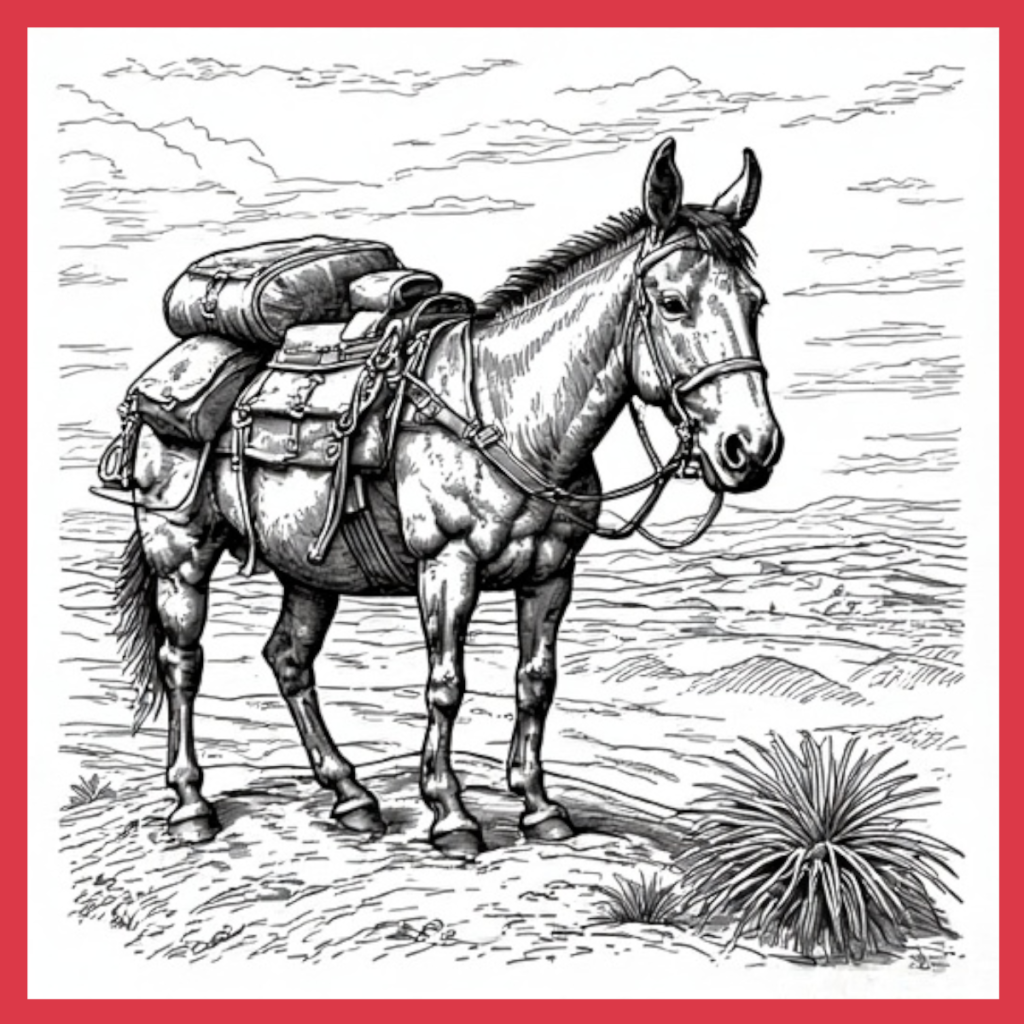
For the king of Babylon stood in the highway,
At the head of two ways, seeking divination, shuffling arrows:
He inquired of the idols, and consulted entrails.
Eastward again, on my way I observed this started to tarnish,
What I had found at Ein-Gedi, the sword, and I took to it polished,
Needing no reason to steady it twice with desire for carnage,
Knowing my state was enough to outweigh it, to thus be demolished
Might I be caught in a circumstance favor’ble toward aggression,
Thus I was keen on avoiding a fair fight free of advantage,
Clueing my final arrival of thence in my journey’s procession
Rationing water and food with judicious a stomach to manage
Wherein the journey would harm us with changes unplanned and capricious
Taking a toll inexact by a spirit of thieveries manic
Governing chance, but can chance and its spoils, its treasures delicious
Even if ever unlikely, be less than the creaturely panic
When it is come to the hour of crisis and tentative sparing
Which has befallen the vulner’ble man, for if ever he watchful
Nothing prepares him for death, stung-viper of living and faring
Leaving him nothing but stench and debris and detritus and offal
Sounding of nothing, and now as the sun turns dim as a lantern
Hung on the heavenly dome to the night as it ruminates under
When I arrive I, relieved, can regard it as like to a hand-turn
Keeping me safe from the same rot which descended as thunder
Earlier that day, when I was fell on by men and their switches
Seeking my meagerest portion, my trembl’ng I hastened to cancel:
Chance if I think of the ruins of life I had once with its riches,
Sentiments, simple arrangements and treasures I see are but fanc’ful
Far from their place, and the ground has a quality thirsty and tannic
Var’ously smooth on the hills and distressed on the lower egression
Trodden by donkeys, and squalid from dry days (needless to panic)
Leaves an unstated confusion of travelers’ honest procession
Which I contribute to now with my own feet lest it deceive me;
Even the flow of the waters, but bitterest fountains of rancor
Hold to themselves as if told, and my wanting refreshment is measly
That I would seek it, but drawn to its promise as ship to an anchor
Might I partake of it; then by the time day finished its passage
Came I to town square, faced with another regrettable toil
Having to think if I sleep in the square, am I prey to the savage,
Not as if what I have carried was needful or visibly royal,
Rather I know from the fact of escaping my near-crucifixion
Men with the means need not for a motive to minister evil,
Evil itself has its own thrill, power; and sin, as affliction,
Worsens without good treatment, and men who have much would be gleeful
Thieving from donkey and man if he nary a worry of testing,
Trying a man who could better resist, and a small observation
Shows me a target already, in lacking a visage arresting:
Crippled and short and alone — but so much said this in oration! —
Listened a moment, I listened, and heard on afar but a gurgle,
Heard I a fountain? I stood with my donkey, unnear any townie,
Casting my eye all about, with a half-mind shy of a burgle,
Till I detected the echo again, and I sought it as bounty
Finding a spring in the wilds indeed! and with ornament-fin’ry,
Vessels and vines and adornments of age, in my feebleness stubborn
Watered the donkey d’wnstream and I drank from its source as from win’ry,
Robbing the water unmarveled to whom it belonged or was govern’d,
Finding myself and my donkey depleted, but raised on up newly
Once we had drunken a spell, and with groping a hand I had purchase
Over the edge and arose, and I saw from afar (and, so truly,
Far it was) one who resembled the man I had met in our worthless,
Dire captivity, which had inspired my protocol fanc’ful
Coming to visit, and once I had known it required me trouble
Armed and prepared for the task, and too close to withdraw or to cancel
Now in our sights, and as much as my death was a fire to stubble
Restless are those who have died, and how lonely the soul in dismissal,
When it expires, the body is found, and the call of the cradle
Hands it to solitude soundless, but clamped in the chambers abyssal
What have I met but a friend to survive in our destines fatal?
Walking to use of the spring, and I used it as common for rabble,
Which I conceal by withdrawing my donkey to save my appearance,
Then as he finds me I hail, and weapon I need for a battle
Firmly in sheathe on the donkey; he stopped with a distance for clearance
When he considered the greeting, but nothing to help his detection
Came to his sight so he turned and retreated without but delaying
Even a moment, unusual choice I would think in selection
Since he was certainly not clear whose donkey was braying
Wherefore he might be expecting a visit and, far from elated,
Fled, and the place he is now is for hiding from someone pursuing,
Then I am hinting, in presence, a problem to soon have cascaded:
That I have found him could mean his retreat was a frivolous doing:
When it has happened by one, it has happened by many, so urgent,
Therefore, was flight; but I think it worthy to follow and enter
Back to the town, for I only was privy, and not but a merchant
Knew from my lips the location, and thus I returned to the center
Reckoning what I could say to dispel his anxieties present
Which may decrease with the going of sun-light, people’s dispersion,
Darkness descending and movements concealed from the stars effervescent,
Since it could (this I imply with no meaning to cast an aspersion)
Save him the trouble of others observing him deal with suspicion,
That it be obvious this man came to pursue his evasion,
Might he be formerly dealt with by thugs for a bandit’s alliance;
Though I would call it a pret’xt myself for a likely invasion,
Being a stranger, he also is equally likely for violence
Which is the risk, I accept it; and now I am nothing for saving,
Found him awaiting approach, and as Moses for decades was dry-shod,
Here was Baruch with the same face swollen, a fleshy engraving,
Though he was slightly improved, and he looked at me like I had tried God,
Finding Him worthy a match, for I bore on myself s’ch as sentence
That he had too; he remarked with the cagey restraint of a larder
Peace, and I said to him Peace, and remarked Art thou here for a penance?
Which he ignored to respond with a sentiment absent of ardor
Penance enough was Masada – agreed? without my concurring
Thence he continued, I spied thee afar at the spring thou wast drinking
Which for ourselves is our own, but with nothing but manners deterring,
There thou wast watered, thy donkey as well, and I turned from it thinking
Thou wert a stranger, a foe from the city, and long have been tempted
Seeking the pertinent things, for no ev’ryday brigand or bandit
Comes to the place we are now but the Judahite zealots exempted
Wanting the place of their elder, of which I have nothing to gambit;
Thus I replied, Of their elder?; Baruch nods, Yea, his location,
After the city was razed, is unknown; he was great in his college,
Those who had mastered the Law, and by cause of his own instigation
Many had come, as myself, to the knowledge of God by his knowledge,
Mighty his mind, and discerning his tongue, and we servants, pathetic,
Sought him his words, but he grudged us all that for his plans we would foil,
Then he was gone in the last days; then, in the chaos frenetic
Due to the favor he showed for me, zealots exposed me to toil
Which is the state we had met in their mountainous fortification;
Wherefore my capture was that these men could determine his where’bouts,
What was thy reason, my friend? so I gave him a small indication
That from the battle to finding the zealot survivor we share doubts
Toward the means of avenging my loss, so his subsequent freeing
Came from its own serendipity; thus from our claim by the prison
Now we were here both, which he dismissed: See, now by thy fleeing
Zealots could follow thee here to continue their obstinate mission
Raiding the village, unguarded, with dozens of warriors scornful;
Here I had fled as the same for the eagles who nest in the mastic:
Hidden is good, but it works once; something arose in him mournful
That I observed and considered if speeding here drastic
Made me a target; he said to me Many by them have been orphaned,
Many deprived of their husbands, but few from an innocent rural;
Zealots descending upon this place would require, proportioned,
Equal resistance, and eyeing my blade, I imagined a mural
Showing the progress of nations around us, a dread composition
Since the division of peoples is meant for all Jacob to reckon
Even his own sin, such for Baruch who by his righteous decision
Lived by the Law though not by his birth, for the Lord did he beckon;
Thus I had heart to reassure him to tell him, For what I had suffered,
Finding a blessing as this is sufficient to keep from despairing:
Heavenly smile, attentive to what I had meant to recover,
Seeking a strange back-slider, recalling his words from our snaring
Back at Masada; Baruch grinned, saying, A memory, Abel,
Otherwise wretched, but sharing mistreatment conjoins us as brothers;
Find for thyself good lodgings and make for thy donkey a stable,
Then we may better prepare if we await for the coming of others;
Making our way to his residence out on the edge of a wet swell
Ruddy with soil diminished with watery drag and decayment
Slightly encroaching his dwelling, but lest I deride him who met well,
Modest indeed did he live, but apart from Masada’s abasement,
Much was to envy, a dwelling at last of no lasting aspersion
Where we retired; I hitched up the donkey and loosened the beast’s load
Taking a share of supplies to be shared, if Baruch in conversion
Knew me a stranger, and there by the lattice the breeze flowed
Filling the hut with a fresh life, then I unwrapped my provisions
Offering raisins and fig cakes, which he obliged this evening for dining,
While we spoke in a frank tone toward our flight from the prison,
Thence, for Baruch, he had here in the wilds a place for resigning
Where he had more than enough, and the stores of his stables were ed’ble
Even without guests, though in the stores of the monies he muster
Left him with earnest desire for better, and seeing it cred’ble
Given the modest conditions with nothing of comfort or luster
Here was a man with a floor to his torments and bitter misfortune,
Nothing above it, wherewith his state was without any masters,
Little could even be said to it more than the want of an orphan,
More than all that I myself had beholden in many disasters
Might he be truly believed; for he shared but a brief glimpse thence in accounting
Some of his troubles, a reticent man with a host to consider
After the fall of Jerusalem, but this and his problems amounting
Must be described in a moment; the time would become to deliver
Even the place we had fled from potential avengers and hunters
Seeking him, seeking me, seeking the Father Elijah he mentioned;
Whether responsible thus for our troubles, of many my blunders
Makes it no less of a problem, to wit, be it well-unintentioned,
Which so demanded our reason and ate up our first conversation
Whence we agreed on a mutual readiness measure by measure,
Keeping a weapon nearby, for if many would seek explanation
Over the whereabouts not known, arms were stupendous a treasure
Keeping us living; Baruch had no sword as I (hardly disputed),
Though he himself had a buckler and harpe, consigned for the stoking,
Sadly, of night’s cook-fires, but now for a purpose computed
Better designed, and in time would determine a fearful evoking
When it was needed; for now, we reclined with a platter of sauces
Salted, balsamic and tangy with gardens of herbalist’s spices
Soaked into bread, and we treated the topic of Pentateuch glosses:
Me, to observe on his knowledge of Torah and Jewish devices;
Surely Baruch was curious too of his desp’rate lieutenant;
Keeping the talk to the point we were neither unnerving or callous,
Simply with wish to discern of the other if chance was to end it
Might an array of pursuers arrive with unmention’ble malice,
Thieves of our lives be they not, for we wager our own as the last stakes,
Thus was explained by Baruch who had something of sensible valor
Knowing he knew not whither Elijah was over a vast space,
Even so, came to it not with timidity, countenance pallor,
Rather he made with it peace and to fight was his one resignation,
Equally mine, for I came all the way for a cause predetermined
Which if I also endangered a friend I should owe him formation
That we resist a combatant together, by guilt I confirmed him
Waiting in private seclusion if wary be resident watchers;
Little Baruch would divulge on the fact of his race, and disgraceful,
Said he, did Father Elijah consider his mothers and fathers,
Though he would trust him above all the others as properly faithful:
Rather than retreat to his place in the west Alexandrian ghetto
Father Elijah invited Baruch to the temple’s construction,
Serving as sort of a courier, whether to city or meadow
Carried his letters, for this is the means he preferred for discussion,
Which was controlling the means of his message, as well as the vessel;
Thinking, I drank from the water Baruch had retrieved to possession
Whence he had found me, but lest it be seen as denoting him special —
Here he exclaimed to me that he was naught but, to use an expression,
Merely obliging to neighbor and master, with nothing as lively
Which would regard him, to wit, with a skill or a pertinent soil
Making him expertly militant, otherwise doing it blithely
Whereas the rest would regard it as only undignified toil
Which they expected would make him favor their labors and person
Though, he explained, for Elijah no favor could ever be curried,
Nothing was surplus, and this misalignment would slowly but worsen
Even approaching the end, for the man was eternally hurried
Never abiding enough time even for thanks or a token,
Smidgen of gratitude, save for a single, distressing occasion
Therewith Baruch left quietly; still he expands the description,
Father Elijah, a genius, a cru’l command of his station,
Seeing his brethren as tools of the common in need for conscription
Toward a goal, an objective beyond war, better than battle:
What did he mean? it was one of his curious policy turnings,
Which was alluring but cryptic, and much as a master must saddle
What he intends to accompany to lands with his promise of earnings,
Father Elijah would saddle his brothers with tasks to the last dead
Keeping designs in his mind with no mind to bequeath it his fellow,
Showing resolve in misfortunes befalling as straight as a mast-head
Which was a cold, pure virtue, so none could accuse him as yellow
When he was gone, for in truth he was toward his opponents a hammer,
Thus he is sought in the wake of disaster to plan and regather
Israel scattered, a better return, a repatriate banner —
Casting my eye to the window, my donkey abated from lather
Peacefully laid in the dust, on its own, for a beast has no nation,
Not as for men, and if men were as property none would be going
Cast to the four winds, that would be then but a diff’rent equation;
Watching, Baruch frowned, seeing my eye on the slippery glowing
Simmering down to the earth in the limber embrace of a wide plain,
Thence I elected to sleep on the out-side; might I deplore gain,
Living ascetic alone? but I better predicted a night rain
Which would be slight advantageous to run on us, thus in the doorframe
Slept I for something of four full hours, used for resistance
Out in the open, for watch and alarm, as I thought of a new plan
While in the new moon dark was my friend, and my eye on the distance
Kept me from pride, I myself but a thief, who could not be a true man.
At my destination • watering from the spring
Finding an acquaintance • possibly pursued
Father Elijah • sleeping outside