
21 Jan The Analogy of the Circle
Those of you who have followed my work for some time now should recall my longstanding commitment to publishing a book about the fundamental problem which divides true Christianity from its imitations: the problem of polarities and the analogia entis, the analogy of being. I have centered this book on the commercium, the ‘wondrous exchange’ professed in the Epiphany liturgy, as the complement to the communication of idioms in the Incarnation which reinforces the analogy of being. I also describe this problem as the final decision in the Two Powers controversy (à la Dr. Alan Segal) and the Power Distinction (à la Dr. Lawrence Moonan). Suffice to say the book has a scope with some ambition but I trust it shall, when completed. set forth a contribution to the Catholic theological discussions ongoing now.
My work has brought me into farther reaching discussions than I initially expected, and I am grateful to those who have entertained my research thus far especially my advisor Dr. Tom Neal. Additionally, I have appeared as a guest on several podcasts and video interviews discussing both my new book and my ongoing research. My work alongside Analogia Entis, discussing the eponymous analogy of being as it appears in Fr. Erich Przywara SJ (and its subsequent reception in Hans Urs Von Balthasar, among other Communio authors). Answering questions on the analogy of being initiated in this place has led me to consider a discussion about the command the analogia entis has over Catholic thinking, as well as the fragility in rendering it earnestly. I therefore would like to pose a brief sed contra to someone with whom I have only amicable disagreements, Gideon Lazar.
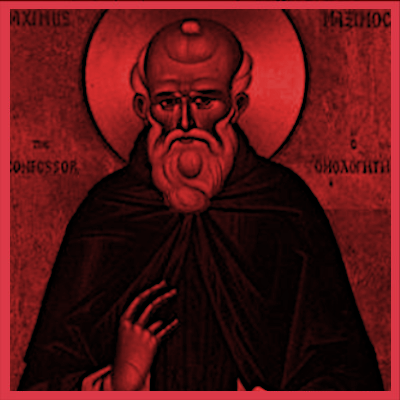
I of course, prickly and difficult man that I am, have no shortage of points in which I might disagree but it is especially with regards to his somewhat recent academic article I wish to articulate an objection. Lazar’s St. Maximus’s Metaphysics of Creation in Ambiguum 7 presents a case for several contentions in St. Maximus against Origen of Alexandria. Much of this fares well to academic scrutiny, if the sources are not more than eclectic (depending on Bradshaw, Blowers, Feser, Balthasar and Sherwood). What I have to say then is not a refutation then but rather a measured warning. The delicate nature of analogia, this tangled knot which separates the first moment of the world and the abyss underneath it that we call infinity or mystery, can be easily dissolved if underdeveloped. I believe the conclusion that Lazar draws here summarizes exactly what I wish to caution against:
Maximus’s own metaphysics are based on the distinction between beginning and end. The beginning state is not the same as the end state. While paganism sees history as essentially cyclical, Christianity holds history to be, at least in the big picture, linear. [VII]
The defining property of any relation of analogy is polarity. Polarity has two positives with one related to the other, as in essence and existence or in beginnings and endings. These have the note of opposition but opposition need not be dialectical negation. The concept of male has its own character distinct from female, and female has its own character beyond being not-male. This is why I have often related to Przywara’s Spannungseinheit, the unity-in-tension, as principal in the maintaining a buttressed understanding of relations generally. A relation posits something of dissimilarity precisely at the point where one thing is itself and not another, all the more that the two things in a unity-in-tension, or any analogy, require that the relation be of the second to the first, and not otherwise. This sources to that primeval polarity in God-creature, where all multiplicity and separation originate. God adds a secondary object to Himself, who is beyond subject and object, and adds to His infinity that draws ex nihilo beings into likeness of Himself. God as ἀρχὴ, the beginning, and τέλος, the end, articulates the highest mystery of God that these two are not distinct within His Godhead. He is beyond all polarity, and the division of these concepts begins with creation, and shall end with the end of that same creation. If we accept that same God as beyond beginning and beyond ending, then we similarly cannot accept that a creation which is ‘in Him’ is therefore at one and the same time strictly chronological. If God is immanent and working in nature, then He is near to all things and thus all things do emerge from Him and return to Him in a very distinct way: beginning with God providing its immanent existence and ascending to His transcendent perfections. The emergence from a form, exitus, begins with a substance, as does the perfection, rediditus, end with the same substance once perfected. This however is as meaningful to say that the difference between the two is that one is perfected and one is not, which is further to assert that one is a substance in its beginning and one is the substance in its teleological conclusion. This doesn’t add to the definition but merely recites the polarity, which itself, as theology, encompasses the mystery.
Lazar here has indicated a kind of collapsed polarity between beginnings and endings which reflect a strictly chronological assessment of history. I would not suspect this is intentional, only that he stopped short in his analysis of arriving to what St. Maximus was actually doing. I am also not of the opinion that this is what the Catholic Church has taught, given the fundamental Catholic form is the analogia entis. It would perhaps be tedious but more direct to reference other passages from St. Maximus that expand on how he does not believe history is merely or even primarily chronological. Rather, I wish to draw on a segment of my upcoming work to argue the following:
1) History considered in itself (philosophically) has a chronological character. It however has a cyclical character considered with respect to God (theologically). Lazar alludes to this when he says that Maximus believes the exitus-rediditus ‘are not a procession and return in the absolute sense since they do not start an end at the same point.’ This is considering substances philosophically, while the context is the cosmos as an artifact of a Creator, which is to say, theological.
2) The mystery of receiving the divine activities (ἐνεργείας) encompasses the mystery of becoming like God, which is to say, beyond polarities. It is to be finite but with access to the infinite Godhead, and to be divinized but ever-divinizing. It is to be without passions, απαθείς, but to have those passions rightly ordered. The mystery then is central to God’s own being and not merely history, since it is the question of God’s own motionless motion, or better stated, ‘restful activity.’
Time and History
The classical view of time can on rare occasions be observed in writings remote to us in their origin. We recognize this view in myths of alien or altogether abandoned religions, where cycles such as the seasons and the movement of planets configure into a vision of the cosmos as a recurrent creation. The death of the world in fall and winter becomes the renewal of the world in spring and summer; the phases of the moon have it slowly darken before a complete darkness, which then proceeds into a growing light; the grand interval of the equinoxes over many thousands of years cycle between the signs of the zodiac before beginning anew.
Modern man can dismiss this as a primitive impulse in mankind, overcome by replacing it with a more progressive, often Hegelian, perspective. Once the past is always left behind, the liberal future ahead promises a continuous historical march toward knowledge, mastery and the fulfilment of nature. Christians might see the classical view as merely pagan, which projects the natural cycles of creation into a thesis of cosmic history, an idolatry that makes the corrupted creation an eternal and unthinking circle. Modern Christians could invoke the definitive beginning of history in Genesis and the definitive end of history in Revelation as clear evidence that time is necessarily linear. I wish to offer a different appraisal of this view in order to aid our own ability to discuss modernity outside of modern categories. Time in this way is one of the unique inventions of Christianity (see the 2014 edition of Przywara SJ, Analogia Entis pp. 583-595).
Eternity has the connotation of circularity, with the Greek αἰών in Scripture meaning both a single age or as eternity when used to describe an “age of ages” or the “end of the age.” It is αἰών which gives the measure of God’s mercy (Ps 137) and the kingdom of God (Rv 22) which both exist outside of time. All things come from the Creator for existence, and all things return to the Creator for judgment: for of him, and through him, and to him, are all things (Rm 11:36). Even if the historical process in itself is linear, insofar as it is a movement from and through and toward its Creator outside of time, it is not linear but circular. Dionysius the Areopagite, in that transitional period between the classical and the medieval, most liberally employs κύκλος, “circle” or “cycle” to describe the patterns by which creation imitates Creator. Souls rotate in κύκλος around what they desire or love; the holy angels surround God “circularly […] by being united to the illuminations of the Beautiful and Good, without beginning and without end”; and “circular movements of time” imitate God as true love, the “Divine Love” Himself ‘a sort of everlasting circle whirling round in unerring combination, by reason of the Good, from the Good, and in the Good, and to the Good, and ever advancing and remaining and returning in the same and throughout the same.’ Dionysius the Areopagite, Divine Names IV.4-14.
The repetition of natural cycles described in OT Wisdom literature (notably Qo 1-3) recalls this imitation of God, even the foreshadowing of the redemption for which the whole creation groaneth and travaileth in pain together (Rm 8:22) awaiting the summation of all things in the Word of God. The Jewish people measured time in the repetition of Jubilee years and the cyclical passing of generations, preparing for the redemption by remembering the days and the seasons. The great task given to Israel in keeping festivals and a robust calendar meant that they remained aware of how the cycle of time brought them closer to God’s works and thus God Himself. Creation’s imitation and repetition of God indicates a greater recapitulation where God intends to gather together in one all things in Christ, both which are in heaven, and which are on earth (Ep 1:10). St. Irenaeus of Lyons, an early source for this view, contends:
The Lord [Jesus], therefore, recapitulating in Himself this day, underwent His sufferings upon the day preceding the Sabbath, that is, the sixth day of the creation, on which day man was created; thus granting him a second creation by means of His passion, which is that [creation] out of death. […] He has therefore, in His work of recapitulation, summed up all things […] in order that, as our species went down to death through a vanquished man, so we may ascend to life again through a victorious one; and as through a man death received the palm [of victory] against us, so again by a man we may receive the palm against death. Irenaeus, Adversus haereses V.23.2,V.21.1.
Irenaeus, drawing on the deeply Pauline motif of new creation, understands the tapestry of history as repeating patterns which all foretell the work of salvation according to the Scriptures. Irenaeus, the Areopagite and other classical Christian authors do not affirm an “eternal recurrence” or an ineludible repetition of historical events. Rather, they position the reconciliation of creation with the Creator as central to the process of history. This one superhistorical process of creation, fall, death, resurrection unto glory spirals out into these smaller cycles, even the natural cycles we first observed, as patterns of mimicry, the creation itself a passive participant in its redemption by God. Time stands between God and creatures as the final appeal of difference, with the material realm within time and the spiritual firmly beyond time. Nonetheless time reveals the work of God: via negativa, because it points to Him as its single origin and destination; and via positiva, because of the intervention of God in history for human salvation.
This latter sense more vividly imbues natural cycles with meaning. Rising in the morning to retiring in the evening, annual seasons, rainfall coming from heaven and returning to heaven: all these depict “redeeming the time” when these things become liturgically charged through Christian feasts and holy days, remembering the work of God in creation.
From this vantage, we can with greater clarity find the differences between time as merely a chronology and time as an image of eternity. Chronology, from the Greek χρόνος, gives a linear, ordered and thus relative sequence in time progressing to infinity. Modernity comfortably situates itself in χρόνος because it can define time relative to itself, and given the finitude of χρόνος it has nothing to say about origin or destination. On the contrary, αἰών signifies eternity and the structure of eternity, as earlier described, containing both notions of “everlasting” and “an age” or “secular” in context. Modernity only acknowledges the legitimacy of its own age or secularity, so it has little compatibility with time as an αἰών. Modernity has even less in common with καιρός, a specific time or appointed time, even “season” or “opportunity.” Καιρός describes a proper moment, a word which Jesus Himself employs for “My hour” or “the time of your visitation.” Time as καιρός is fixed, definite and demands attention, and modernity cannot incorporate it earnestly. Modernity must see eternity as a time in the future, because it does views heaven not as above but ahead, at the cusp of χρόνος. Many commentators on modernity have described this as a “Copernican displacement” where the ideal no longer remained in heaven but rather was sought in the future. Before modernity, as Dr. Michael Gillespie (2008, Theological Origins of Modernity, p. 1) wrote, people “did not look forward to the future or backward to the past, but upward to heaven and downward to hell.”
But what is always ahead is never here, and so eternity never comes; καιρός however requires eternity to show itself in time, since intention and appointment from eternity appears within time as καιρός, becoming manifest in the “now” and eventually “then.” Modernity cannot acknowledge καιρός if time is relative to the now, since καιρός is somewhere in the future along with eternity. If καιρός were the now of the present moment, then it is only καιρός by equivocation, since καιρός no longer has its intrinsic property of opportunity and season, since it never changes but stays put. In this way modernity’s view of eternity can only cling to a χρόνος where eternity lies somewhere ahead, and the present ossifies into an infinite impermanence. Perhaps it is no wonder that the pagan Xρόνος becomes an image for the secular, since it becomes in a true sense the god of modernity. Modernity processes as one long Saturnalia with its role reversals, pleasure-seeking and human sacrifice, all a rite for the cruel father who devours his own offspring to prevent his inevitable usurpation.
The Tragedies of Zagreus and Saturn
Astute readers will observe that from my original contention, that if history is indeed linear in itself and circular with respect to God, then there are in all three possible errors.
1) To view both God and history as a linear process.
2) To view both God and history as a circular repetition.
3) To view history as a circular repetition and God as a linear process.
These are the three problems which can be observed in the broader categories of deviations from the analogia entis. I actually have my own way of describing these (the first as Adamic, the second as Evean, the third as Cainite) but it may well serve to simply borrow Przywara’s own terminology here: the first is theopanism, ‘God-is-all’ and the second is pantheism, ‘all-is-God.’ The third is a unique inverse of the analogia entis which only occurs in rare circumstances, when theopanism and pantheism blend together to refuse the analogia entis. I’ll highlight this at the end since it is so strange, but it is precisely not what is relevant to Lazar’s own argument.
Lazar seems to be responding to circularity and κύκλος as it would appear in its ‘pantheistic’ pagan avatar, especially in Aristotle. Przywara describes this in vivid, violent detail:
Certainly, the [Aristotelian] ‘movement of alternation,’ in its abruptly changing rhythm of ‘contradiction-identity,’ accentuates the ‘in-between’ [metaxy]; […] true to its Platonic ancestry, this form of the in-between is that of a rhythmic equilibrium, and as such incompatible with the severity of ‘contradiction,’ as ‘contradiction has no between.’ That particular in-between of which Plato has no notion and which Aristotle explicitly subsumes under the [universal] is, rather […] the ‘mutilated’; which is to say, the ‘torso.’ It is at once ‘part’ and ‘whole’ […] While the Platonic rhythm is identifiable by its oscillating in between, the in-between manifested by the Aristotelian rhythm is the ‘mutilation’ of the ‘torso,’ that is, the remainder that is ever again left behind by the abrupt movement of alternation. Erich Przywara SJ, Analogia Entis p. 257 [revised for readability]
The ‘mutilation of the torso’ can be put side by side with what in the story of Dionysus, Zagreus or Bacchus in the event called the sparagmos: the tearing apart limb by limb. This story is extremely old, with its origins dating back to the first wine-centered mystery cults. It was alleged that Bacchus ascended Mount Olympus, as a son of Zeus, to take his rightful place on a throne of the twelve. Zeus’ jealous wife Hera incited the Titans to dispose of Bacchus when he made the ascent. Bacchus arrives and the Titans meet him, mocking him with a crown made of twigs and offering fake worship before grabbing each of his appendages and pulling him apart by force. Bacchus is said to have been drunk and in his ecstatic mutilation cried out to his father. The Titans ate his body, leaving only his heart from which sprouted a grapevine, which was transplanted into a human woman to be regenerated into a risen king.
Aristotle’s philosophy is therefore compared to a story about the one being divided between the many, with forms being dispersed into a primeval reality. Dionysus’ rise also fits into a universal motif, found in all cultures and folktales, about a onceand-future king, at one time feigning madness or drunkenness as well as undergoing an excruciating ordeal. This survives in plays such as Hamlet. Dionysus in the earliest sources is associated both with revival as well as chthonic, or underworld, deities, even being equated with Hades himself. Dionysus worship was many times suppressed because of his overturning, or dismembering, of social structures and hierarchies. The sexual overtones of the mutilation are not lost on the ancient Greeks, who most explicitly characterize this dimension in the inspiration for the Orphic mysteries.
Przywara in referencing the Dionysian, the chthonic and the fiery vitalism refers to this pre-Hellenic and likely Asiatic figure who possesses those who consume wine. The division of the one deity and regeneration positions a necessary suffering, a bitter burning of wine which lightens the spirit; much like the grapes which must be destroyed before they become the spirit-lifting wine, Dionysus must be torn asunder if he is to become the daemon of the orgiastic Bacchanalia. Dionysus again belonged to a very ancient cult, and his worship is the origin for the genre of tragedy. The cult would gather together and initiate new members with the sacrifice of horned male animals such as bulls and goats, representing strength. Tragedy receives its name from this central animal, the goat: in Greek, tragos. The bleating of the dismembered goat was mimicked by a group of cantors, identifying the assailants with the victim, and this group chant became the first choirs. Tragedy became a theatrical performance from these reenactments of the sparagmos.
Given that Lazar is responding to the pantheistic κύκλος of the Zagreus myth, he veers slightly too far into what Przywara calls theopanism. This approach to analogy has a Platonizing pagan character, explained in this way by Przywara:
The real stress of the Platonic analogy thus falls upon that ‘immortal struggle,’ and Plato says ‘the battle is undying. . . . Gods and spirits are our allies, and moreover we are the property of these gods and spirits.’ The creaturely moves between these two extremes, that of being enclosed within: ‘We may not say of the universe that it perpetually turns itself,’ and that of being moved by God ‘We may not say it is perpetually turned by God,’ alternating between being immediately led by God who ‘guides it on its path and imparts to it its revolving motion,’ and rapidly falling away ‘when God releases it, and it then begins to turn back again on its own in the contrary direction,’ – without, however, supposing its cause to be some twofold, that is, both good and evil, ground of the world: ‘We must not say it is moved by two gods.’ Erich Przywara SJ, Analogia Entis p. 243 [revised for readability]
The immortal struggle he describes recalls the chariot of the sun and the motions accorded to its wayward arc in the heavens. This is most often known in the myth of Phaethon, the son of Helios who recklessly demands his hapless father hand over the reins to the chariot of the sun. Phaethon embarks on his daytime ride over the Earth, and at some point loses control of the horses carrying the chariot due to his own adolescent inexperience. As the chariot plummets to the Earth, constellations are thrown out of order and the face of the planet is scorched. Zeus intervenes by throwing a lightning bolt at the chariot, killing Phaethon who falls into a river. Helios takes the reins of the horses back, and the body of Phaethon descended into the waters, raising a sickening stench from the riverbed and glowing from his watery tomb.
As should be evident this corresponds to Plato’s description of the forms descending into the material world, the highest Good somewhere unseen beyond like the rays of the Sun which illuminates them all and grants them intelligibility. While the myth of Dionysus has its appeal among a disaffected underclass and the malcontents of ancient society, this myth had no real mystery cult surrounding it. Instead it found appeal among the intellectual elites, with well-educated Pythagoreans electing this as one of the few myths they retained; even ancient Egyptian priests remarked that this was like their stories about the lost eye of Ra being thrown into the Nile. There is often an element to the tale, much like Dionysus, of ecstatic and sexual gratification; Phaethon in such imagery is usually turned upside down with expressions indicating such a character to his fall. We have here a strange tale indeed. A once well-arranged cosmos, for reasons beyond the reckoning of its master, has its just course derailed in a tragic fall to the earth.
However the identity and antiquity of this myth inspires more controversy than you might imagine. The figures in the story, even more than Dionysus, have ambiguous identities. Helios may be an import from Canaanite worship of Baal, or could even originate with horse tribes in the Eurasian steppe. The oldest stories about Helios do not have him with a son, but rather the name Phaethon identifies either Helios himself or another one of the Titans, Saturn. Saturn himself was emasculated and thrown from a chariot by Zeus in the Titanomachy, and the overthrow of the Titans culminated in this act of patricide. The damage caused by Phaethon’s chariot ride seems to be more permanent than the tragedy plays imply, as astronomers in ancient Greece point to the Milky Way as the original path of the sun before Phaethon detached it from its original course. Saturn’s identification with the sun, the passage of time and the inexplicable destruction of his offspring allude to a nexus of mythic tales which all allude to the same kind of hidden mystery regarding the universe’s fallen course. We are under a solar governor shifted to the wrong track, perhaps at least being redirected to its proper place.
Both of these myths have their ostensible tragic character, the very genre owing to an implacable force that only comes to our knowledge in the grip of a mystery cult. The instruction in such mysteries comes from the process of entering into the temple in the dark, being suddenly seized and then thrust into the cult initiation. These cultic rites encompassed a process of reenactment, imitation and some kind of ritual sacrifice.
Religions for the most part had this character of the tragic, with sacrifice especially in Mediterranean rituals having no single clear explanation. The genre however remains more consistent than the practice of shedding blood or even consecrating consumable goods, like livestock or fruits of the harvest, to a deity. Before gratitude, the hallmark of what marked an act as supernaturally charged was this tragic element. This is expressed in the philosophies of both essence and existence. The finitude in one area proposes a necessary deficiency. Thus in pantheism, the limits of existence are to be found in essential finitude, where the law of reality bears down on us all, even the divine. In theopanism, there are no essential limits to reality but only the fact of our existence: whether or not we ourselves get to be a part of the infinite ascent, since not all get to be a part of it.
The Catholic religion however does not center on tragedy. We foremost recognize God’s creative aspect as adding to Himself and not subtracting; God doesn’t take up space even in His infinity, so He doesn’t need to contract Himself, or cut Himself apart, in order to create. That makes creation not an inherent tragedy, but rather a joyful occasion. Additionally, from the perspective of the Incarnation, all such notions of tragedy must be rejected for Przywara. The sacrifice of Jesus Christ necessary falls outside this genre, which he repeatedly explains. To paraphrase his unfortunately verbose and disparate argument: the tragic has several elements which do not appear in the death and resurrection of the Son of God. Tragedy is usually defined by a dramatic irony: the audience is aware of the genre while the victim is wholly ignorant. Yet Jesus predicts His death repeatedly, there is no dramatic irony to be had except on His contemporaries. Likewise the cult of tragedies has as its initiation the sacrifice and incorporation into the body of the victim. However in Catholicism, initiation takes place before this participation: one cannot partake in the Eucharist before a complete initiation, water baptism and anointing with chrism. Finally, the tragic has a decisively satirical character, especially satire of the victim. The exaggerated masks, the symbol of the satyr itself and the kind of mimicry taking place establishes this whole genre of tragedy as an extensive commentary and satire of reality. It is in this way destructive. Christianity however does not begin with the imitation of the participants with the victim. It is that the victim is already mimicking the participants: God becoming man, and then man only much later becoming like the God-who-becameman. There is no satire, then, and no exaggeration save for what the victim says about the participants. It is the precise inverse.
The satirical and commentary nature of tragedy thus becomes evident. The tragedy is not simply a lament, but an attempt to explain and solve all mystery. This can be expressed as the mystery of creation, which does not explain itself, or the mystery of iniquity and suffering. Tragedy seeks an answer to evil, and really to all mystery, and explain it through the language of tragedy. Theopanism and pantheism are simply the two modes of trying to do away with mystery, and to solve it.
Under the Sign of Saturn Comes the Divided King
I do not believe that Lazar, again, in any spirit of retrojection attempted to read theopanism into St. Maximus. However it bears a mark of Hegelian ‘exitus-rediditus’ which could jeopardize his theology, and reduce a linearity of history into a linearity of God. I think this is most evident from this conclusion he offers on St. Maximus’ description of linear cosmic destiny:
Maximus viewed history as a development of the world’s ascent to God. If he had been able to see the future, he certainly would have viewed his own writings within the larger tradition both before and after, and so it seems that he would not have rejected the title of proto-scholastic except out of his humility. […] What Maximus offers to modern people is a return to a more metaphysical way of seeing the world.
Any description of ascent to God, linear progression to God, historical dispensation and anthropological historicism must always be tempered by its inverse, which is the propriety of cycles, renewals, recapitulations and starting each one anew. This is why I think Lazar has only understated one side and not dispensed with it. I do not think he has proposed anything in the realm of German Idealism or Barthian, but rather that the echoes of these reverberate in his work here and threaten its integrity. He writes, for instance,
For Maximus, the procession and return are fundamentally Christocentric. In other works, Maximus places the fundamental turn from motion away from God to motion back towards God as the crucifixion and resurrection. Maximus argues that Christ “recapitulates (ἀνακεφαλαιούμενον) all things in Himself” because He is the beginning, middle, and end of the procession and return. [VII]
Truly this is the polarity of the curse and the blessing, the crucifixion and the resurrection, the baptism into the death being the same as baptism into the raising up of Christ. It is the unity-in-tension between the curses of the Old Covenant falling to God for the sake of His people, and the blessing of the new percolating through the sacraments into God’s own people. This is the ‘wondrous exchange’ of the economy of salvation: we get everything, and God dies for ‘nothing’ – that is, He dies for nothing other than our own gain. This is love, that God knows He cannot be paid back because He is in need of nothing. Lazar understands this, and so it is puzzling that his conclusion is
This redemption and elevation of the entire creation is done in and through the person of Christ. As mentioned in section VII, Christ “recapitulates (ἀνακεφαλαιούμενον) all things in Himself.” Maximus is therefore able to refute the Origenist use of “portions of God” in Gregory Nazianzen in two ways. Just as all beings “are called ‘portions of God’ because of the λόγοι of our being that exists eternally in God,” so also Christians specifically are called portions of God because they “are the members and the body of Christ.” Christians can be considered portions of God therefore in two different ways. All beings are portions of God insofar as they participate in the person of the Son as the Λόγος, but they are also portions of God insofar as they participate in the person of the Son as he is redeemer. The entire universe therefore naturally reflects Christ, but through its divinization, which comes through His incarnation, death, and resurrection, it comes to reflect Him to an even higher degree. [X]
The reconstitution of the ‘portions of God’ is not of the same category as its initial image, of which all things are exemplars and derive from the ‘Form of Forms,’ it is that the recapitulation is the ever-greater dissimilarity of creatures is reconciled in the Person of Christ. The utterly alien and dissimilar natures of God and creatures are united in the identity of the Word Himself, which does not destroy the analogia entis but completes it. It is not merely becoming the ‘image of God’ but the likeness of God, as was the favored explanation of the Greek Fathers.
A chief influence for Origen, the Jewish author Philo of Alexandria (a favorite author of mine, as you all well know) wrote in his widely copied De Mundo that
But in order that no one might imagine that the Creator had need of anything that he had created, Moses has made a most important declaration when he says, “The Lord, the King of ages, for ever and Ever.” Accordingly, God is both the Father, and the Creator, and the Governor, in reality and truth, of all the things that are in heaven and in the whole world. And, indeed, the future is concealed and separated from the present moment at one time by a brief, and at another time by a long interval. But God is also the Creator of time, for he is the Father of that which is the father of time; and the father of time is the world, which proves that its own birth is the motion of time. But nothing is future to God, because he is in possession of and the author of the boundaries of time; for it is not time, but rather the archetype and model of time. But in eternity nothing is passed, nothing is future, but everything is at the present moment. [VII, Yonge tr.]
The God who interacts with the world without interval and who foresees without estimating achieves His aims with the world in the same way He created; Providence and the creating act are only apparently two distinct powers, but in truth are one and the same single Power, the Word of God. Therefore we must agree with Philo, who remained unresolved or modified in Origen, that God as the ‘Father of time’ prototypes time despite the dissimilarity; the character of time with respect to God remains circular, because it is imaged of the circularly-endless God.
I did promise to mention at this point that third possibility, of a circular creation and a linear God. This is the path of certain mystical speculations of the post-Second Temple liturgical traditions of the Jewish religion, notably in those following the Sepher Yetzirah and later the theurgical dimensions of Kabbalah. It is not present in Second Temple authors (certainly not Philo nor in Josephus) but is the later accretions designing a reenactment of God’s primeval tragedy, the Fall of God (Shevirat Ha-Kelim) and the exaltation of man in the repair of His Image (tikkun Olam). Today it regards the endless horizon of history as this circular formation and communal reinforcement which continuously brings God and the Law into reality; it is the diversity of all peoples within the unity of humanity as an inner ideal (Beriah, or creation), a path to its messianic goal in renouncing the present reality to ascend into the infinite (Yetzirah, or Formation) and social morality as the telos of creation (Assiah, action). The living God of revelation must become again like the Ein-Sof, but it never will. The coming Messiah for the post-Christian Judaism is believed to distribute a single kingdom into many more kingdoms, much like Jacob did among his sons. This was one of the signs that Sabbatai Zevi for instance performed in the synagogue when he pronounced his messianic mission. The division of one into many is in Judaism itself the divine act of creation, the entrance of new multiplicity. Thus Phaeton, who is astronomically and mythically parallel to Saturn, has already been a symbol of Jewish messianism. The ‘reign of Saturn’ in the heavens is alleged to precede the birth of the Messiah; another symbol of Sabbatai Zevi from whom he takes his name, Sabbatai meaning Saturn.
I mention this final piece to remark that as Lazar examines the relationship of Catholicism and Judaism, it must be evident in this ultimate divergence that the dual God of Ein-Sof and the God of revelation is not, as Philo of Alexandria would have it, the simple God of self-existence, ‘I AM WHO AM’. Their exegesis of Exodus 3:14 is far removed from the first century understanding, it is rather the penultimate confession of God admitting His need for Beriah, Yetzirah and Assiah. I believe that by observing the analogia entis in St. Maximus and beyond, Gideon Lazar’s goal in bringing Jews into the Church will be aided because He will be more thoroughly equipped to engage with their differences. As he remarked once on Lurianic theosophy, there is much to be desired in its sophistication. I hope he finds that its antinomy to Catholicism is not accidental, but rather a refusal to the fundamental Catholic form in all possibilities. The road to the conversion of ‘Israel of the flesh’ is, I reckon, only a path along the narrow defile of the analogia entis. As St. Paul remarks, what can the clay say to the potter? It is the ever-greater dissimilarity.